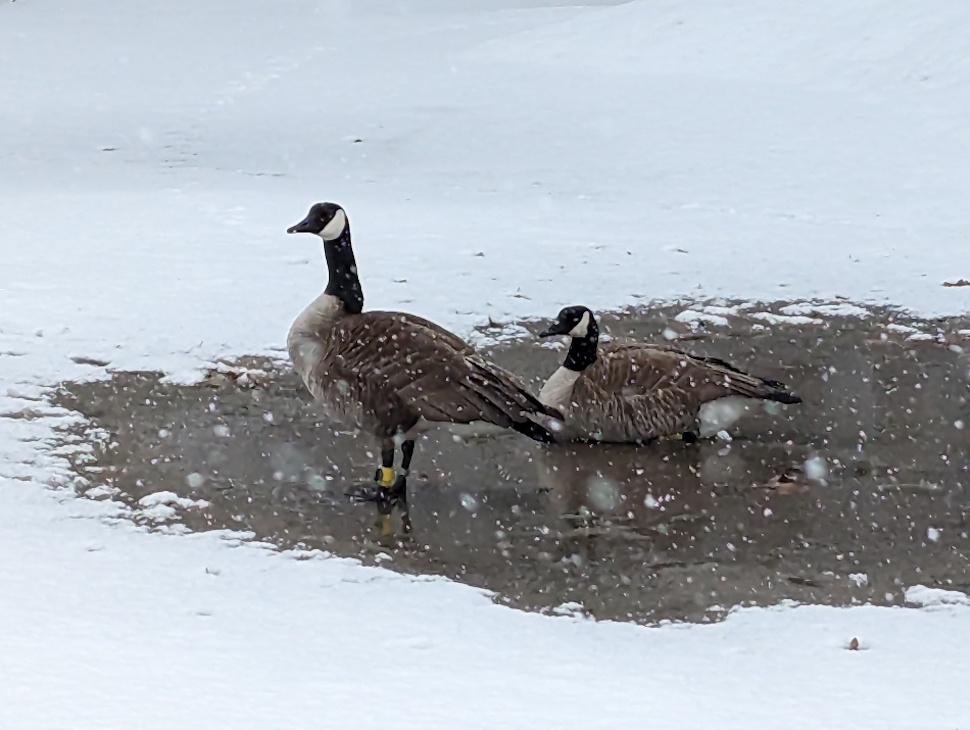
After several residents spotted dead geese and mallards around town and wondered what might be causing it, the City of Portage la Prairie confirmed this week that avian influenza has been detected in wild birds in the region.
While the news naturally raised concerns, an expert says what’s happening here is part of a much bigger, and fairly normal, seasonal picture.
Matt Dyson, a research scientist with Ducks Unlimited Canada’s Institute for Wetland and Waterfowl Research, says avian influenza, often called bird flu, tends to show up more noticeably at this time of year.
“Avian influenza is a disease that we know naturally circulates within waterfowl,” Dyson says. “These influenza viruses are native, so to speak, to waterfowl, and they’ve occurred for a long time.”
Young birds at risk
The particular strain circulating in recent years has proven more persistent than previous ones, lingering since roughly 2021, and fall is typically when researchers see cases pop up. Dyson says young birds, especially those hatched this past spring, may be more susceptible.
“These birds may be what we call immunologically naive. They haven’t been exposed previously, so they have no natural immunity and therefore have a higher potential immune response resulting in mortality,” he explains.
Cold weather plays a role
As temperatures drop, stress on migrating birds increases. Shrinking patches of open water, reduced food availability and large groups of birds gathering in close quarters all help the virus spread more easily.
“It’s getting colder, there’s less food available, and those areas of open water are smaller and smaller. Anytime we put large populations in smaller areas, the probability of transmission increases greatly,” he adds.
Even so, scientists are not seeing signs of widespread population impacts.
“We see individual die-offs, but we haven’t linked this virus to declines at the population level for ducks or geese,” he says.
Tracking cases across Canada
Monitoring avian influenza is a national effort involving multiple agencies. One of the most helpful tools available to the public, he says, is an online dashboard run by the Canadian Wildlife Health Cooperative (CWHC), which compiles wild bird detections from across the country.
“It’s a really useful tool for seeing what’s happening beyond your own community. The Cooperative works closely with provinces to monitor and map cases, so it gives people a good sense of the bigger picture.”
Manitobans can find the dashboard on the CWHC website, which updates as new detections are confirmed.
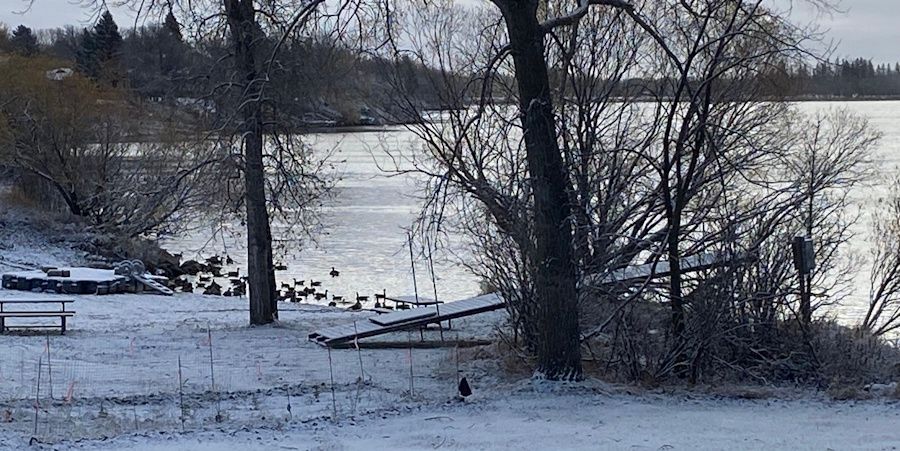 Geese gather on a partially frozen Killarney Lake, a reminder that as open water shrinks and birds congregate, avian influenza can spread more easily, according to local experts. Betty/Sawatzky/Discover Westman Online
Human risk remains low
Dyson says the risk to people is minimal, though researchers remain cautious.
“We’re certainly paying attention because these things can change, but at this point we don’t have any major concerns about human–wildlife transmission.”
The rare human cases observed internationally have mostly involved intensive, prolonged exposure in poultry operations, not everyday interactions with wild birds.
“We don’t have evidence of transmission occurring with interaction with wild birds because wild birds don’t usually occur in the super high concentrations needed for the virus to accumulate to a level that poses a transmission risk,” he notes.
Monitoring isn’t simple
Tracking viruses in wild populations presents challenges.
“One of the tough things about viruses in wildlife is that we can’t bring these birds in for a checkup.”
For this reason, much of the monitoring happens during existing field operations.
“For waterfowl, a lot of preseason banding occurs to help us understand populations and set hunting regulations. During these sampling events, additional swabbing happens to test for the prevalence of avian influenza, whether it’s strains of concern or the lower-path strains that naturally circulate in waterfowl,” he continues.
What the public can do
Dyson stresses that residents play a critical role in helping track what’s happening on the ground.
“If there are sick, dead or dying birds, it is valuable to report them,” he says. “It ensures they get reported to the proper authority, and it provides information to understand the virus ecology.”
He also emphasizes the importance of sticking to basic safety practices.
“Practicing general safe wildlife-handling tips, like not touching sick or dead birds, and keeping pets away from them, is the most valuable thing you can do.”
Along with avoiding contact, residents are being asked not to feed wild waterfowl such as geese, ducks and gulls, even if they gather in familiar spots around town. Feeding encourages birds to congregate more closely, increases stress and makes it easier for the virus to spread.
Worth keeping an eye on
As fall migration continues and temperatures drop, the public may continue to notice the occasional dead bird around Portage, and other areas of the province. Dyson says that while it can be unsettling, it isn’t unusual, and ongoing monitoring helps scientists stay ahead of changes.
Several organizations, including the Canadian Wildlife Health Cooperative and the Canadian Food Inspection Agency, are tracking avian influenza across the country. Ducks Unlimited Canada also hosts information at ducks.ca.
Additionally, if you come across a bird that appears unwell or has died, don’t pick it up or try to move it. Instead, report it to the Manitoba Conservation Branch at 1-800-782-0076, where staff can ensure the animal is handled safely and documented properly.
link