
By understanding medication coverage, comparing treatment options, and asking about the cost of medications, we can make informed choices that align with our individual financial and health needs.
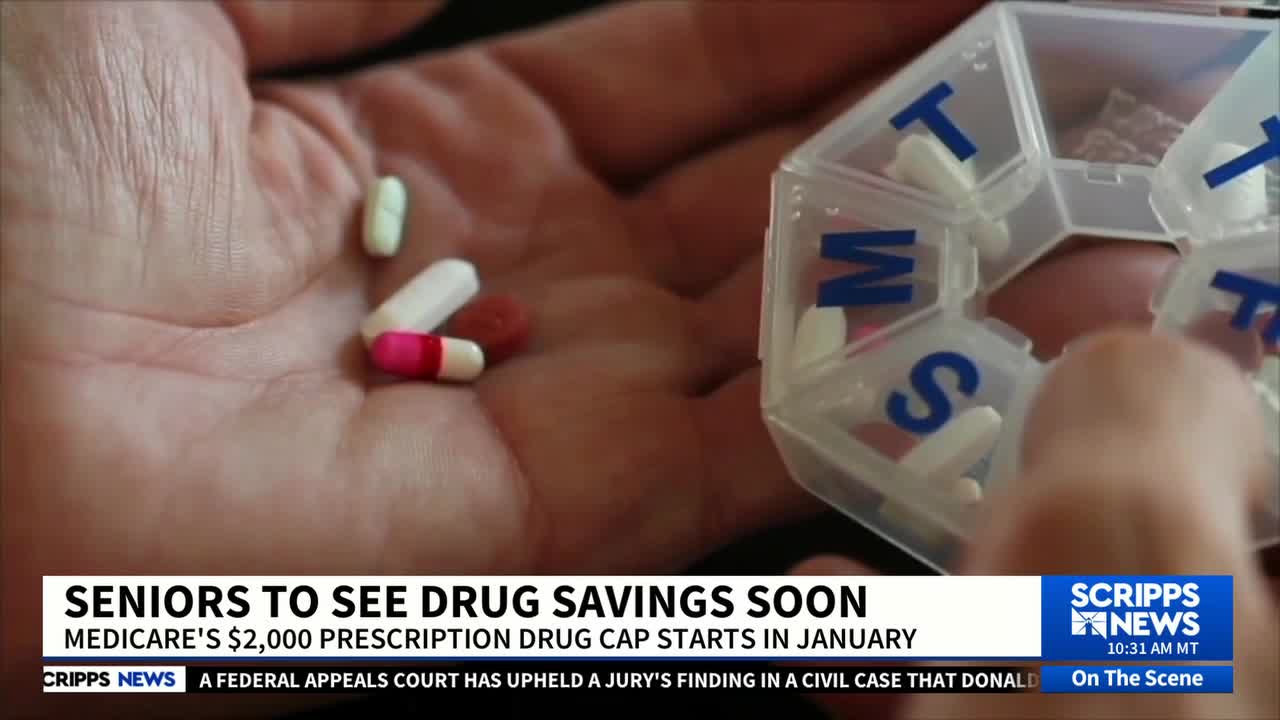

Medicare will impose $2,000 cap on prescription costs in 2025
Starting Jan. 1, Medicare will begin capping prescription drug costs at $2,000 annually, a move expected to save millions of Americans money on medications. (Scripps News)
Scripps News
- Drug prices have risen faster than inflation, contributing to high healthcare costs.
- Lifestyle changes can sometimes reduce or eliminate the need for certain medications.
- Consumers can also save money by opting for generic or biosimilar drugs, which are equally effective and significantly cheaper.
Today, we have a dozen new drugs that hit the market with manufacturer price tags at over $1 million for a one-time treatment. In Tennessee, where the average income per year is around $36,000, that’s simply unaffordable.
On behalf of its members, BlueCross BlueShield of Tennessee paid out $3.5 billion for drugs last year. The average member fills 18 prescriptions a year, with even higher numbers among our Medicare populations. It’s our most widely used benefit, especially when considering the handful of doctor’s visits an average member makes each year.
On closer look, high-cost specialty drugs make up 55% of that spending but only 2% of utilization. These drugs are costly because of exclusive manufacturing rights as well as complex manufacturing processes. Many of them are “biologics,” which are made from living organisms.
Some specialty drugs have helped improve disease outcomes and quality of life in meaningful ways, but let’s be clear:
While providing access to safe and effective drugs is core to our purpose at BlueCross, we also have to consider how they raise costs for everyone who pays for health coverage. That includes members visiting the pharmacy and Tennessee businesses who are paying for their employees’ plans.
But manufacturing fees aren’t the only reason prescription drugs are more expensive than ever.
Why do prescription drugs cost so much?
First, drug prices have consistently outpaced general inflation.
Since 1985, overall drug prices have risen at rates three times faster than inflation. By 2024, drug prices were more than 127% higher compared to the cost of all other commodities.
So, it’s no surprise that pharma leads the health industry with an average profit margin of around 15%, compared to 1-3% for not-for-profit insurers like us, and roughly 5% for carmakers.
Second, drug companies spend billions of dollars every year on advertising and promotion, which drives up the use of pricey treatments.
This kind of advertising is legal only in the U.S. and New Zealand, and it leads to patients pressuring their doctors for brand-name drugs they see in ads, even if they may not actually need them − or when lower cost alternatives that are just as safe and effective are available.
How to stay healthy and keep drug expenses low
Examining our health behaviors and culture toward disease management can help us understand how we, as individuals, can navigate high drug costs.
For example, we’re seeing increased rates of cancer, diabetes, obesity, and other acute and chronic illnesses. And we’ve almost doubled the average number of prescriptions per member since 2014.
But while medication use is often the primary treatment for these conditions − and understandably so − most drugs work best in conjunction with lifestyle changes like exercise and diet improvement. In some cases, lifestyle changes can even reduce our dependence on medications.
At BlueCross BlueShield, we encourage our members to become active consumers in their health care decisions, and we offer resources that can help.
While we don’t set the list price for drugs, we provide formulary and drug cost information so our members can compare drug prices the way they might with other goods. Research shows people might skip doses or avoid filling prescriptions if they can’t afford them, so it’s important to know all the options.
We also provide information on and access to generic and biosimilar drugs that are lower-cost options, and just as effective.
Choosing a generic and biosimilar over a brand name is the most effective way consumers can lower their costs − often by 80-85%. These drugs are highly regulated to be the same as their more expensive counterparts, and manufacturers often produce both the brand-name and generic or biosimilar drugs.
Simply put, becoming informed consumers in our health care journey is crucial. By understanding medication coverage, comparing treatment options, and asking about the cost of medications, we can make informed choices that align with our individual financial and health needs.
Natalie Tate, PharmD, is vice president of pharmacy for BlueCross BlueShield of Tennessee.
link