THE SEAMLESS LINK
This alarming assessment by India’s Economic Survey 2025-26 underscores a critical juncture where evolving societal habits are translating into tangible economic liabilities. The nation’s projected robust growth trajectory faces an undercurrent of potential strain from non-communicable diseases and reduced productivity, directly linked to prevalent lifestyle choices. The survey’s findings indicate that these emerging challenges are not merely public health concerns but represent substantial fiscal risks that require immediate and coordinated policy responses.
The Economic Repercussions of Lifestyle Shifts
India’s economic outlook, while projected to remain strong with GDP growth anticipated between 6.8% and 7.2% for FY27, is shadowed by the long-term economic costs of lifestyle-induced health issues [2, 6]. The Economic Survey 2025-26 posits that rising obesity rates, driven significantly by the proliferation of ultra-processed foods (UPFs), and the pervasive impact of compulsive digital use are actively eroding productivity and inflating future healthcare burdens [3, 4]. The increasing dependence on UPFs alone is estimated to carry substantial economic costs through higher healthcare spending and lost productivity [3]. This situation necessitates a recalibration of national priorities to integrate health and productivity metrics into core economic planning.
Health Trends Fueling Economic Strain
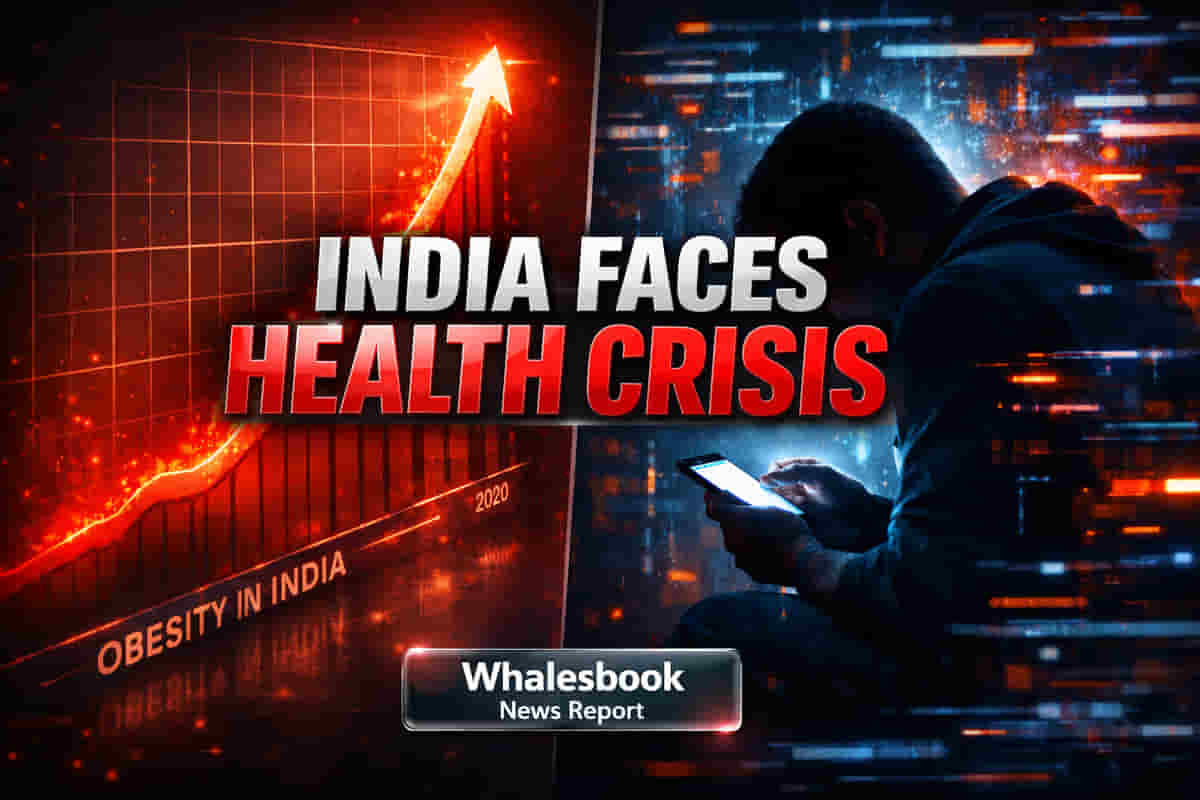
Obesity, once confined to urban centers, has now permeated across demographics, with 24% of Indian women and 23% of men classified as overweight or obese, according to the National Family Health Survey (2019-21) data cited in the Survey [3, 5]. The trend is particularly concerning among children; overweight prevalence in those under five rose from 2.1% in 2015-16 to 3.4% by 2019-21 [3]. Projections estimate India’s obese child population could surge from over 3.3 crore in 2020 to 8.3 crore by 2035 if current patterns persist [3, 9]. This rise is intrinsically linked to the Indian market’s rapid embrace of UPFs, with sales skyrocketing from $0.9 billion in 2006 to nearly $38 billion by 2019 [3, 12]. The survey directly correlates this period with a doubling of obesity rates in both genders, warning of significant fiscal strain and healthcare expenditure increases [3]. The dietary shift is further exemplified by UPF sales growing over 150% between 2009 and 2023 [3, 16].
The Digital Dilemma’s Societal and Economic Cost
Beyond physical health, the survey raises alarm bells over mental well-being in an increasingly digitalized society. With internet penetration reaching 96.96 crore users by 2024 and 85.5% of households owning smartphones, the environment is intensely digital for younger Indians [3]. While connectivity offers benefits for education and employment, compulsive usage exacts a toll. Excessive screen time is linked to diminished study hours and productivity, alongside increased anxiety, stress, depression, and sleep disturbances [4, 13]. The report specifically points to compulsive scrolling and social comparison as drivers of anxiety and depressive symptoms. Furthermore, gaming disorders and real-money gaming pose risks including aggression, financial stress, and even suicidal ideation among vulnerable individuals [3, 13]. The government has initiated measures like the Tele-MANAS helpline and introduced the Online Gaming (Regulation) Act, 2025, to address these issues [4, 11]. However, the Survey acknowledges a critical data gap on digital addiction, hindering targeted policy responses [4].
Policy Landscape and Future Outlook
The Economic Survey 2025-26 emphasizes that addressing these complex challenges requires coordinated policies extending beyond consumer behavior. Initiatives like POSHAN 2.0, Fit India, and Eat Right India are noted, but improvements in diet demand systemic changes across food systems [3]. The Online Gaming (Regulation) Act, 2025, represents a move towards regulating the digital sphere, banning real-money gaming and aiming to promote healthier online engagement [4, 11, 23]. Despite these efforts, the lack of comprehensive national data on digital addiction necessitates further research, with the upcoming National Mental Health Survey expected to provide crucial insights [4]. The report underscores that long-term economic health is inextricably linked to the population’s physical and mental well-being, demanding proactive and integrated policy frameworks.
Disclaimer:This content is for educational and informational purposes only
and does not constitute investment, financial, or trading advice, nor a recommendation to buy or sell
any securities. Readers should consult a SEBI-registered advisor before making investment decisions, as
markets involve risk and past performance does not guarantee future results. The publisher and authors
accept no liability for any losses. Some content may be AI-generated and may contain errors; accuracy
and completeness are not guaranteed. Views expressed do not reflect the publication’s editorial stance.
link