Article content
Reviews and recommendations are unbiased and products are independently selected. Postmedia may earn an affiliate commission from purchases made through links on this page.
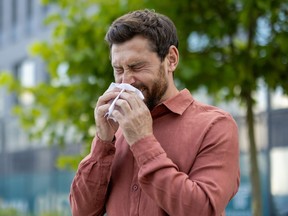
Pollen. Just the word for allergy sufferers may spark a tickle in the nose, a tear in the eye, maybe even the start of a bumpy hive.
Advertisement 2

Article content
And while seasonal allergies may make a person feel angry at the outside world, researchers suggested that the allergies may increase the risk of suicide among sufferers.
Article content
Article content
A new study published in the Journal of Health Economics found that these deaths tend to spike on certain days — specifically, at times when the pollen outlook is moderate or worse.
The researchers our of Wayne State University analyzed more than a decade’s worth of daily pollen counts and suicide data from 34 U.S. metro areas, spanning from 2006 to 2018.
They found that suicide deaths rose by 5.5% on days with moderate pollen levels compared to days with low to no pollen.
“At the highest pollen levels, we observed up to a 7.4% increase in suicides,” Shooshan Danagoulian, lead author of the study, said in a press release.

Your Midday Sun
Article content
Advertisement 3
Article content
She noted: “What’s particularly concerning is that individuals with a known mental health condition or treatment history had an even greater increase — 8.6% — on high-pollen days.”
Itchy eyes and runny noses may seem like minor inconveniences but given how that can affect sleep, strain concentration and make an individual feel generally miserable and moody are all known risk factors for suicide.
RECOMMENDED VIDEO

We apologize, but this video has failed to load.
The research team also analyzed Google Trends data, where they noted spikes in searches for allergy symptoms and depressive thoughts on high-pollen days.
The evidence backed up the idea that aside from allergies impacting physical health, they can also pile on to those already struggling with their mental well-being.
Advertisement 4
Article content
The scientists also looked at how the climate change is intensifying and drawing out pollen seasons, meaning that what is now seasonal could develop into a year-round risk, even estimating that by the end of the century, the number of suicides linked to pollen could more than double.
“This is an overlooked cost of climate change,” Danagoulian explained.
Read More
-

Some plants cause more suffering than others for gardeners with pollen allergies
-
Allergy season has gotten longer and more intense: Study
-
FDA approves first nasal spray to treat dangerous allergic reactions
“We often focus on environmental damages, but here we see clear evidence that climate change may also worsen mental health outcomes in ways that haven’t been fully considered.”
Advertisement 5
Article content
She acknowledge that the risks are preventable, and seasonal allergies can easily be treated with safe, inexpensive and widely available options such as antihistamines, nasal sprays and allergy testing.
“Small, accessible health interventions could have lifesaving impacts,” Danagoulian said.
“If managing allergies helps reduce suicide risk even slightly, it represents a meaningful step in addressing one of the most pressing public health crises of our time.”
For more health news and content around diseases, conditions, wellness, healthy living, drugs, treatments and more, head to Healthing.ca – a member of the Postmedia Network.
Article content
link